

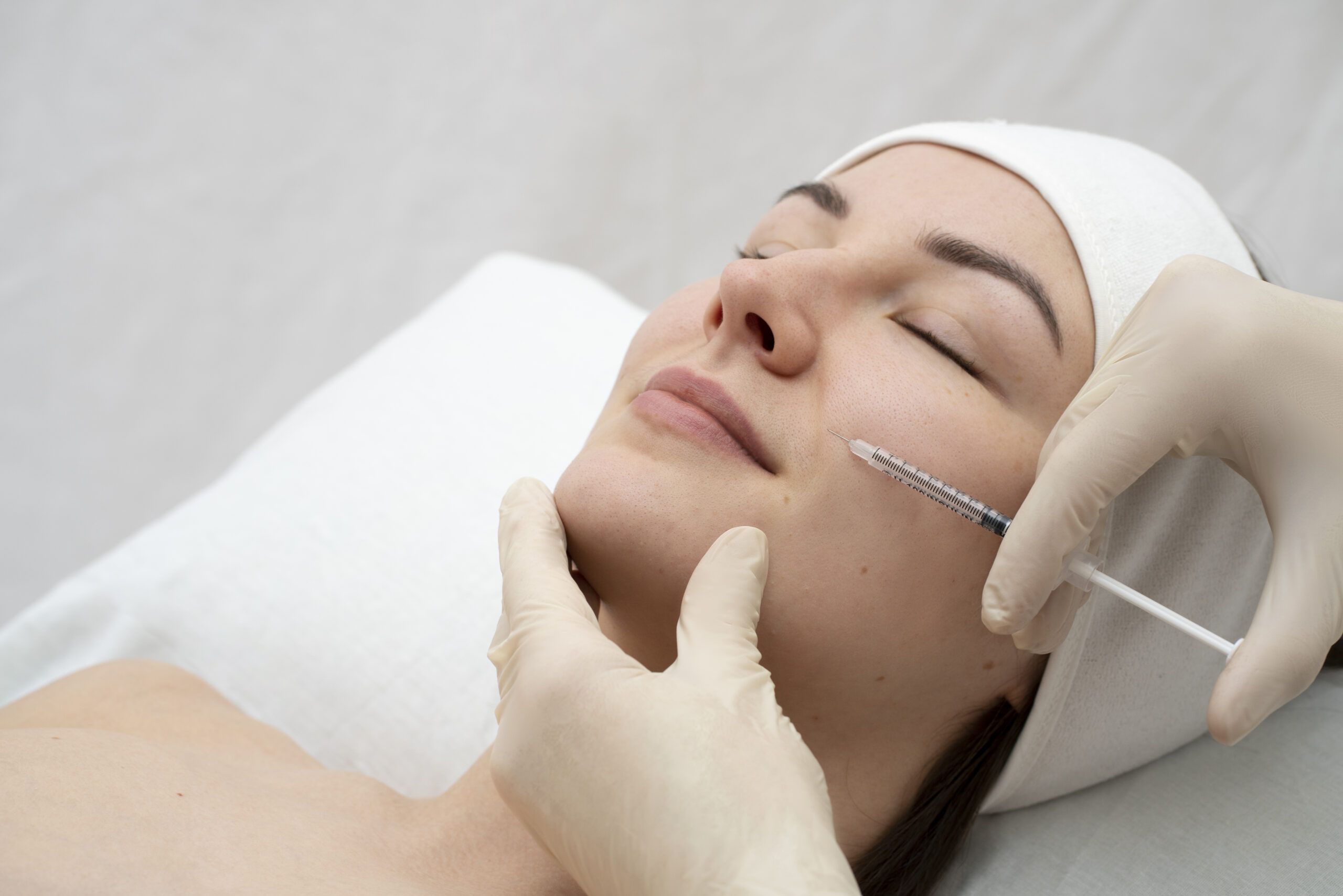

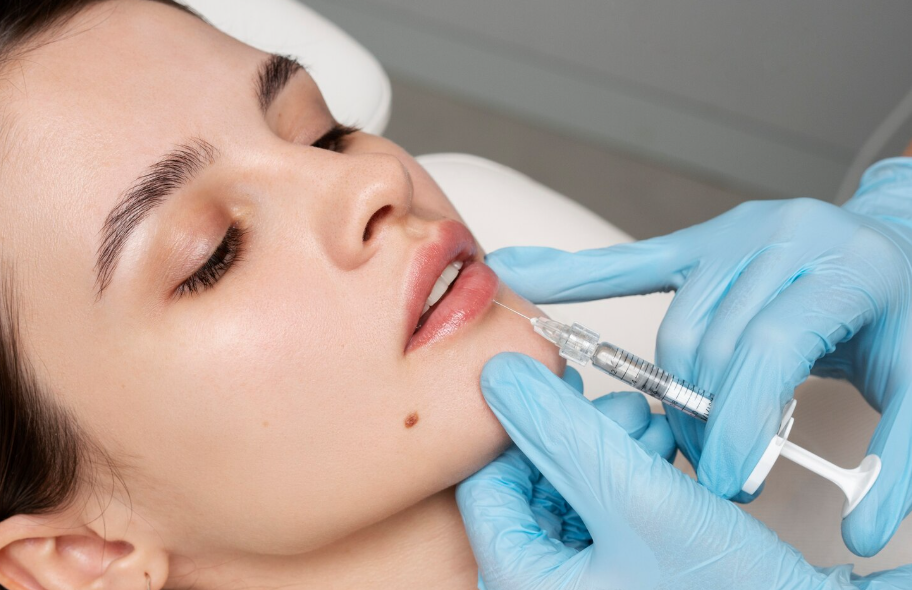
Courteney Cox said it plainly on the podcast: her biggest beauty regret is fillers.
“It’s a domino effect,” she explained. “You don’t realize that you look a little off, so then you keep doing more because you look normal to yourself. You look in the mirror and go, ‘Oh, that looks good.’ You don’t realize what it looks like to the outside person.”
In 2017, she dissolved all of them. She is not alone. A growing number of people are arriving at the same conclusion.

The Problem With Long-Term Filler Use
Fillers are not inherently wrong. Used conservatively, in the right areas, by a skilled injector, they can address early volume loss and keep maintenance manageable.
The problem is what happens over years of repeated use.
Migration. Filler does not always stay where it was placed. A peer-reviewed narrative review documented filler migration cases across patients aged 21 to 86, with women representing the overwhelming majority. Research using MRI imaging has found that hyaluronic acid filler can remain visible in tissue long after the assumed “6–12 month” window. In some cases, over a decade later. The full extent of migration often only becomes visible when surgeons open tissue planes during a facelift.
Accumulation. Each session adds to what is already there. Over time, this accumulates in ways that alter facial structure rather than restore it. The pillow-like, overfilled look that has become recognizable in certain celebrity circles is the result of this compounding.
Tissue changes. Repeated filler use can stretch the skin over time, particularly when large volumes are used. Some patients report needing progressively more product to achieve the same effect.
The “filler fatigue” cycle. Practitioners have documented a psychological pattern: patients become desensitized to the changes, stop noticing what others can clearly see, and continue adding. Courteney Cox described this exactly. “I look at pictures of me from when I thought I looked okay, and I can’t believe it.”
What People Are Switching To
The shift is not toward less intervention. It is toward more considered, longer-lasting intervention.
According to the 2024 AAFPRS annual survey of facial plastic surgeons, fat grafting procedures rose by 50% in a single year. Facelift patients are getting younger. More people in their 40s and early 50s are choosing surgical correction earlier, before aging progresses to a stage that requires more extensive work.
The procedures replacing filler dependency are:
Fat grafting (fat transfer)
This takes fat from one part of the body; typically the thighs, refines it, and re-injects it into the face. The result is volume restoration using the patient’s own tissue. Because the fat is autologous (from the patient’s own body), the risk of rejection is significantly lower. Results are longer-lasting than hyaluronic acid filler and do not carry the same migration risks.
Read More About Different Types of Fat Graftihttps://miinmedicalbeauty.com/fat-grafting-in-korea-stem-cell-surgery/ng
Facelift
A facelift addresses what filler cannot: structural laxity. As skin and soft tissue lose their anchoring over time, no amount of volumising corrects the downward shift. A facelift repositions and tightens the underlying structure; something injections cannot replicate.
Facelift in Korea: The Three Things You Should Never Compromise On
Blepharoplasty (eyelid surgery)
For patients whose primary concern is tired, heavy, or hooded eyes, blepharoplasty provides a correction that filler in the tear trough area cannot fully achieve. It addresses excess skin, not just volume.
Eyelid Surgery
These procedures share something fillers do not offer: permanence and prevention. They address structure. And unlike fillers accumulated over years, a single well-planned surgical result does not require indefinitely maintained top-ups to stay intact.
What This Means If You Are Considering Your Options
Fillers have their place. They are not categorically wrong, and using them appropriately for short-term maintenance is a legitimate choice.
The issue arises when fillers become the primary long-term strategy for facial aging, particularly when they substitute for structural correction that only surgery can address.
If you have been maintaining with fillers for years and find yourself needing more product to achieve the same result, or if you are noticing changes in your facial shape that did not exist before, it may be worth a surgical consultation.
The goal is not to look treated. It is to look like yourself: rested, natural, and proportionate.

Miin works with a selection of rigorously vetted plastic surgery clinics in Seoul, including surgeons experienced in fat grafting and facial rejuvenation surgery. Consultations are arranged at no added cost.
Contact us to get started: