


Korea has become one of the most recognized destinations in the world for facelift surgery. The techniques coming out of Seoul — deep plane lifting, SMAS-based repositioning, minimal scar design — are among the most advanced being practiced anywhere.
The result you get is not determined by three things working together: the surgeon performing your procedure, the facility they operate in, and the post-operative care you receive afterward. Compromise on any one of these and the other two cannot fully compensate.
This blog covers what to look for across all three — and how Miin’s position on the ground in Seoul gives patients direct access to all of them without having to evaluate each one from abroad.
What Facelift Surgery Actually Corrects
Facelift surgery addresses the structural changes of facial aging, not just the surface ones.
The face ages on multiple levels simultaneously. Skin loses elasticity and collagen. The fat compartments that once provided fullness and structural support gradually shrink and descend. The SMAS layer — the superficial musculoaponeurotic system, the deep tissue layer connecting skin to muscle — loses tension. The retaining ligaments that anchor facial tissue to the underlying bone weaken and lengthen. And beneath all of this, bone itself resorbs, particularly around the eye sockets, jawline, and chin, causing overlying soft tissue to sit on a diminishing foundation.
The visible result of this process: jowls along the jawline, deepened nasolabial folds, flattening of the cheeks, loss of the jaw-to-neck angle, sagging in the lower face, and neck laxity. These are not skin problems. They are structural problems. Procedures that address only the skin surface — thread lifts, energy-based devices, even some older facelift techniques — produce temporary results because they do not address the underlying cause.
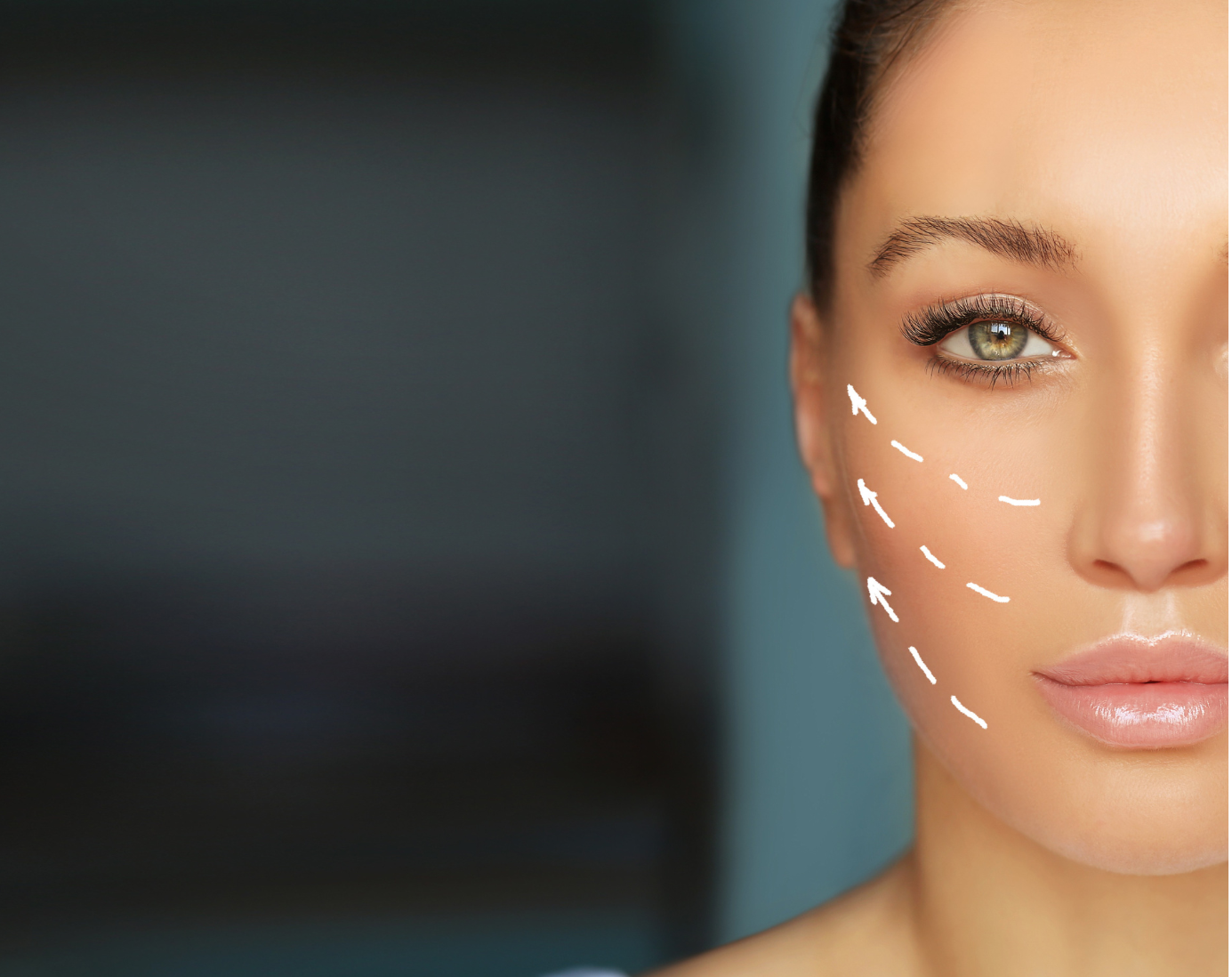
Modern facelift surgery goes deeper. It repositions the SMAS layer, releases the retaining ligaments that have caused tissue to descend, and redrapes the skin over a newly elevated structural foundation. The skin is not pulled tighter. It is placed back where it used to sit.
How Aging Differs — And Why Technique Must Follow Anatomy

Facial aging does not follow a universal pattern. Two patients of the same age can present with entirely different distributions of volume loss, structural descent, and skin laxity. What works for one produces an incorrect result on another.
In your 40s, aging is primarily driven by early ligament laxity, initial fat descent, and the beginning of skin elasticity loss. The SMAS has begun to shift but the descent is not yet severe. SMAS-based facelift techniques or a well-planned mini facelift addresses this well.
In your 50s, mid-face sagging becomes more pronounced. The nasolabial folds deepen because the cheek fat has descended, not because the folds themselves have appeared from nowhere. Volume loss is more significant. The jawline blurs more distinctly. Deep plane techniques that release the key retaining ligaments and mobilize the SMAS and skin as a composite unit become more appropriate — because the cause of the sagging is now structural, and requires structural release.
In your 60s, the full constellation of aging is typically present: significant volume loss in the temples, cheeks, and under-eye area; pronounced jowls and jawline loss; vertical platysmal banding in the neck; and bone resorption that has diminished the structural scaffolding of the face. Comprehensive surgical planning at this stage often includes a facelift, neck lift, fat grafting for volume restoration, and upper face work — not because these are all needed in every case, but because aging at this stage is multi-dimensional and a plan that addresses only one dimension produces an incomplete result.
The technique must follow the anatomy. A surgeon who applies the same approach to every patient regardless of age, degree of descent, and tissue quality is not making a clinical decision.
What Makes a Result Look Natural
The question patients are really asking when they say they are worried about looking “done” is: why do some facelift results look natural and others don’t?
The answer is almost never the technique. It is the planning.
An overdone result comes from over-correcting — too much tension placed on the skin, excessive tissue removal, a lift vector that is horizontal rather than vertical. The face looks pulled because it was pulled rather than repositioned. This is a planning failure, not a technique failure.
A natural result comes from a surgeon who has studied the patient’s specific anatomy, determined where volume was lost versus where tissue has descended, planned the lift vector to match the way the face aged, and executed the procedure with enough restraint to produce restoration rather than transformation.
A deep plane facelift in the hands of a surgeon who understands your anatomy produces a result that looks like you — rested, balanced, proportionate, with no visible evidence of intervention. The same technique performed without that anatomical understanding produces a result that looks operated on.
This is why technique names are not enough. The surgeon behind the technique is what determines the outcome.
Why Korea Specifically — and What That Actually Means
Korea has accumulated decades of concentrated surgical experience in facial rejuvenation. The volume of procedures performed in Seoul’s major hospitals is substantially higher than in most other markets, which means surgeons develop and refine technique at a pace that is difficult to match in lower-volume environments.
Korean surgeons also work across a particularly wide range of anatomical variation. Southeast Asian patients, East Asian patients, Middle Eastern patients, and Western patients all present with different bone structure, skin thickness, fat distribution, and aging patterns. A surgeon who operates on this diversity develops a calibration of technique that surgeons serving more homogeneous patient populations do not.
This is clinically significant. A surgeon trained primarily on one anatomical type may apply inappropriate technique to a different one — a risk that patients from Indonesia, for example, face when choosing a surgeon without international experience. The bone structure, skin quality, and fat distribution of Indonesian patients are not the same as Korean patients, and the lift design must account for those differences.
Why the Surgeon Must Be the Same Person Who Consults and Designs
This is not a procedural detail. It is a clinical principle.
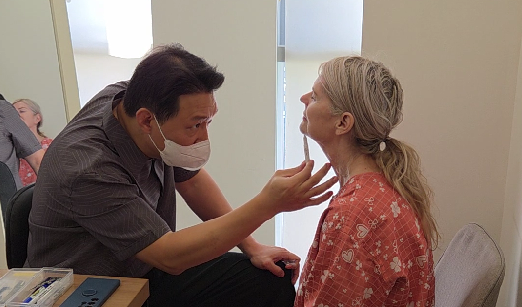
The consultation is where the surgeon develops a specific, patient-individualized understanding of the anatomy, the degree of descent, the skin quality, and what is achievable. The design — the lift vector, the incision placement, the extent of dissection, what to combine — emerges from that assessment.
When a different surgeon performs the surgery, that understanding does not transfer. A plan on paper is not the same as the judgment that comes from the surgeon who spent time examining the face and formulating the approach. The dissociation between the person who planned the procedure and the person who performs it introduces a gap that shows in the result.
Miin holds its partner hospitals to a strict standard: the surgeon who conducts the consultation, designs the surgical plan, and performs the procedure must be the same person. Every time. This is not industry standard across all Korean clinics — it is a specific requirement that Miin enforces.
The Clinic Facility: Why It Is Not Interchangeable
Facelift surgery is a major procedure performed under general anesthesia. The facility where it happens is not a backdrop — it is part of the safety system.
A properly equipped surgical facility for facelift work requires a dedicated operating theater with sterile protocol, a resident anesthesiologist on-site rather than on-call, intraoperative monitoring equipment, and a recovery room with nursing oversight for the immediate post-anesthesia period. These are not standard across every clinic marketing facelift surgery in Seoul.
The facility also determines what is possible if something unexpected happens. Complications in surgery are rare, but they require immediate response capability. A clinic without resident anesthesiology, without proper emergency protocols, or without adequate recovery infrastructure is a clinic that has transferred risk onto the patient.
Miin selects partner hospitals — not clinics — specifically because hospital infrastructure meets a different standard than a standalone cosmetic clinic. The difference in facility grade is not visible in marketing materials. It is visible in how the operating theater is staffed and equipped, which Miin’s team verifies directly.
Post-Op Care: The Part That Determines How the Result Settles

The surgery produces a structural correction. Post-operative care determines how that correction heals — and how the final result actually looks.
In the first weeks after facelift surgery, swelling, fluid management, and tissue adaptation are all active processes. How they are managed directly affects the final result. Inadequate post-op care does not just mean a slower recovery. It means a less complete result.
Miin’s partner hospitals include structured post-operative care programs as part of the surgical package. This includes LED therapy to support cellular repair and reduce inflammation, lymphatic drainage treatments to manage swelling, and personalized follow-up appointments where the surgeon reviews healing progress and adjusts care accordingly.
For international patients who return home within days of surgery, this window of supervised recovery is the most vulnerable point of the entire process. Miin’s coordinator accompanies patients to post-operative appointments throughout the stay, manages communication between the patient and the clinical team, and ensures nothing that needs to be addressed goes unnoticed before departure.
Post-op care is not an add-on. It is the period when the surgical result becomes the permanent result. (And for Miin clients, it is provided, tailored to you. Because we know ourselves how important post-op care is)
How Miin Selects Its Surgeon
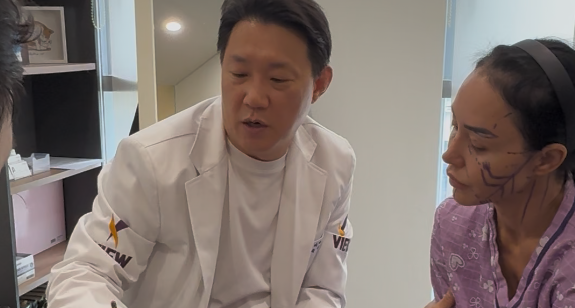
This is the part of Miin’s work that is invisible to the patient but determines everything.
Miin is based in Seoul, and the team works directly inside the Korean medical ecosystem. That means access that patients researching from abroad simply do not have: direct relationships with surgeons and hospital owners, the ability to attend consultations, to review surgical plans, and to observe results over time across a real volume of patients.
Miin does not select surgeons based on hospital reputation, certifications on paper, or the marketing materials a clinic produces. The selection is based on results — actual outcomes seen consistently across real patients — and on technique, specifically whether the surgeon has the anatomical understanding and surgical discipline to produce results that look natural on patients from Southeast Asia.
When results are inconsistent — even from a surgeon at an existing partner hospital — Miin stops recommending that surgeon. The relationship is with the individual clinician, not the institution. A hospital name does not guarantee a result. A surgeon’s track record, which Miin can verify directly because it operates on the ground in Seoul, does.
This level of access does not exist when a patient researches independently from abroad, books through a generic booking platform, or relies on a coordinator who has no direct relationship with the surgeons beyond referral fees.
What the Facelift Consultation Should Cover
A surgical consultation for facelift that is doing its job goes well beyond “what do you want to fix.” It assesses:
- The specific distribution of facial aging — where volume has been lost versus where tissue has descended. These require different corrections and the distinction matters.
- Skin quality and elasticity, which determines which technique is appropriate and what the skin will do after repositioning.
- The degree of SMAS laxity and retaining ligament descent, which determines whether SMAS-level correction is sufficient or whether deep plane release is necessary.
- Neck anatomy — whether neck laxity is a separate concern requiring its own correction, whether submental fat is contributing to the appearance, whether the platysma requires tightening.
- Prior treatments — filler accumulation, thread lift history, previous surgeries — all of which change the tissue planes and influence what the surgeon can do.
- The patient’s goals and timeline, including travel constraints and realistic recovery expectations.
A consultation that skips any of these is producing a plan without a complete picture.
Miin coordinates facelift consultations with surgeons handpicked by our team based on results we verify directly, not credentials on paper. If you are planning facelift surgery in Korea, get in touch to start building your trip.