


There is a pattern many patients notice after significant weight loss. The body looks slimmer. The face looks older. What felt like a health improvement starts to create a new set of concerns in the mirror.
This is not coincidence. It is anatomy. And it is exactly what fat grafting is designed to address.
Why the Face Ages When You Lose Weight
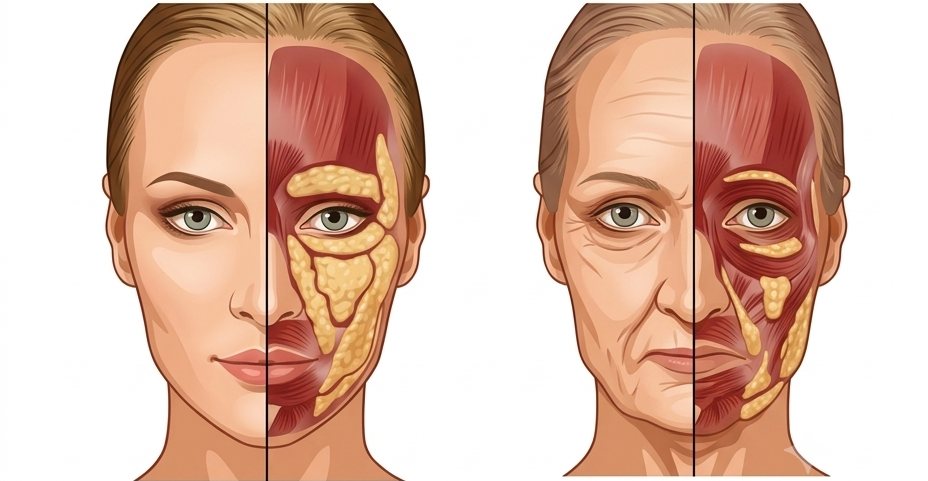
The face is not a flat surface. Beneath the skin sit distinct compartments of fat — deep and superficial — that provide volume, support skin, and give the face its three-dimensional shape. As these fat compartments shrink with age or rapid weight loss, the consequences compound: cheeks flatten, the under-eye area hollows, nasolabial folds deepen, and the skin no longer has the internal support to hold its position.
The same process happens with natural aging, just more gradually. Either way, the result is the same: a face that looks tired or deflated even when the person feels well.
No topical product addresses this. Volume loss is structural. The solution has to be structural too.
What Fat Grafting Actually Does
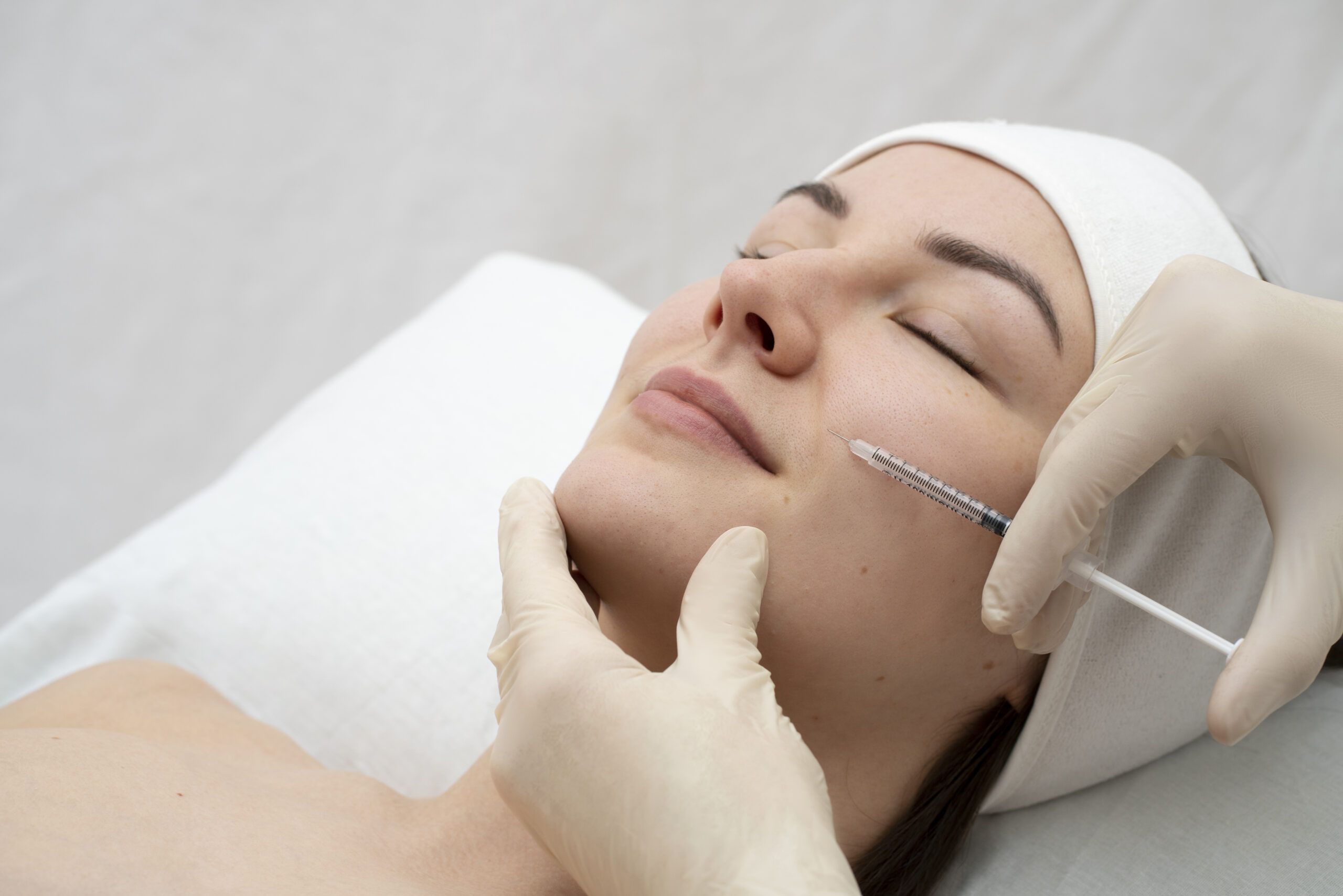
Fat grafting harvests fat from a donor site on the patient’s own body, purifies it, and injects it into areas of the face that have lost volume. Because the material is the patient’s own tissue, there is no risk of allergic reaction. The fat integrates with the surrounding tissue and, once blood supply is established, behaves like living tissue rather than a foreign substance.
The procedure does not just fill space. Done correctly, it restores the three-dimensional balance of the face, creating smoother transitions between regions, improving facial proportion, and producing a result that looks natural because it is made of natural material.
“Ozempic Face”: When Weight Loss Ages the Face
GLP-1 medications like semaglutide (Ozempic, Wegovy) and similar weight-loss injections have become widely used. They produce rapid, significant weight loss, faster than the skin and facial structure can adapt to. The result has been given a name: Ozempic Face.
Clinically, it presents as hollowing of the temples and cheeks, a gaunt or skeletonized appearance where the orbital rims and cheekbones become prominent, deepened nasolabial folds and marionette lines, and skin laxity that develops faster than gradual weight loss would produce.
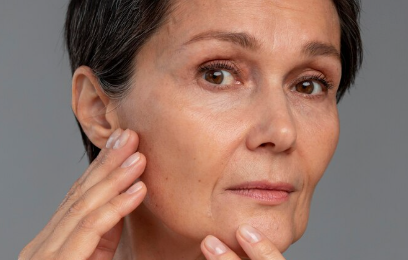
Fat grafting is the primary surgical correction for this. The volume that was lost needs to be replaced, and it needs to be replaced with something that integrates permanently rather than dissolving after 12 months.
If you are still actively losing weight on a GLP-1 medication, the recommendation from most surgeons is to reach a stable weight before undergoing fat grafting. Grafted fat cells respond to continued weight loss the same way other fat cells do. Operating on a stable foundation produces a more predictable and lasting result.
Note: It is mandatory to stop any GLP-1 medication at least 3 weeks before your surgery date.
Which Areas Respond Best to Fat Grafting
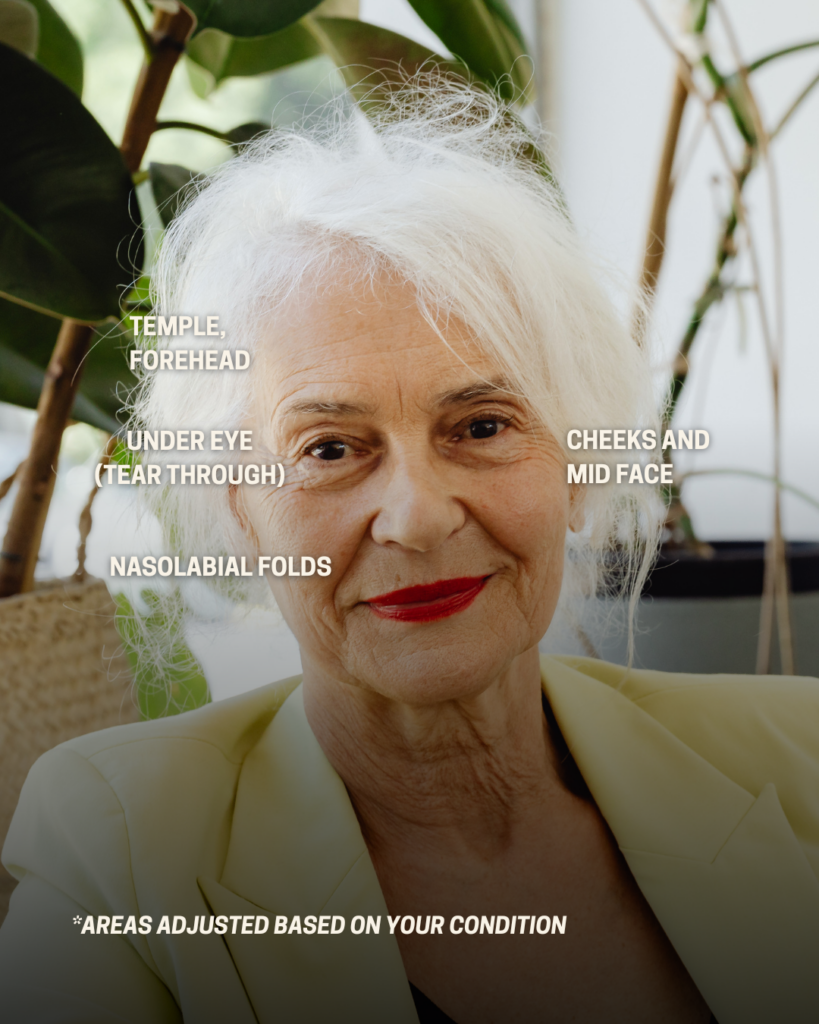
Fat grafting is planned across multiple areas simultaneously rather than targeting one zone in isolation. Facial volume loss is distributed and a multi-area approach produces a more cohesive and balanced result than spot correction.
The most commonly treated areas:
- Forehead: Restores smooth contour to a flat or irregular upper facial line. A full forehead with even volume reads as youthful; a hollow or bony forehead ages the face significantly.
- Under-eye (tear trough): The hollow between the lower eyelid and cheek creates a persistent shadow that makes the person look tired regardless of how rested they are. Fat grafting softens this transition, often more naturally than filler, which can look blue or lumpy in the thin skin of this zone.
- Cheeks and midface: The most impactful area for facial rejuvenation. Restored cheek volume lifts the entire mid-face, reduces the depth of nasolabial folds, and improves the jaw-to-cheek transition.
- Nasolabial folds: When the folds are caused by volume loss above them rather than skin excess, fat grafting provides more lasting improvement than filler or surface-level treatments.
- Temples: Hollow temples are one of the most age-revealing areas of the face and one of the most commonly overlooked. Restoring temple volume rounds the upper face and removes the skeletal appearance that comes with age or weight loss.
Fat Grafting vs. Fillers: Why the Comparison Matters
Hyaluronic acid fillers are a legitimate short-term option for mild volume loss. The problems arise with long-term use.
Fillers dissolve — typically within 6 to 18 months. Repeated sessions accumulate, and as established in earlier research, hyaluronic acid can persist in tissue well beyond its marketed duration, migrating from its original placement and distorting results over time. Each session adds to what is already there, and the compounding effect changes facial structure in ways that become harder to correct.
Fat grafting, once the transferred cells establish a blood supply, behaves as permanent living tissue. The fat that survives becomes part of the face. It does not dissolve, does not migrate, and does not require indefinite maintenance.
The practical consideration is survival rate: not all transferred fat cells survive the process. In conventional fat grafting, the typical survival rate is approximately 40 to 50%. This means some volume is lost during healing, and in some cases a second session is needed to achieve the desired result.
Stem Cell Fat Grafting: Why Survival Rate Matters
Stem cell-assisted fat grafting addresses the survival rate problem directly.
Adipose tissue is rich in adipose-derived stem cells (ADSCs). Standard processing separates fat cells but does not concentrate these stem cells specifically. Stem cell-assisted techniques take the additional step of isolating and concentrating the SVF — the fraction of adipose tissue that contains stem cells, growth factors, and regenerative components — and mixing it back into the purified fat before injection.
The effect is two-fold. First, the stem cells improve the environment for fat cell survival by supporting the development of new blood vessels (neovascularization) in the grafted area. More fat cells survive because they have a better blood supply to sustain them. Korea’s stem cell-assisted approach reports survival rates of approximately 80 to 90%. Both represent a substantial improvement over conventional methods.
Second, the regenerative components in the SVF improve the quality of the overlying skin. Patients often notice improvements in skin texture, elasticity, and luminosity in treated areas — a benefit that standard fat grafting and synthetic fillers cannot replicate.
The result is not just more volume. It is volume that lasts longer and skin that responds to the treatment with genuine tissue regeneration.
The Concern People Don’t Say Out Loud: The “Overfilled” Look
The reason some patients hesitate before fat grafting is a legitimate one. They have seen what happens when it goes wrong — faces that look puffy, round, or disconnected from their natural bone structure. The concern is real.
What produces that result is not fat grafting as a technique. It is fat grafting applied without proportion planning — too much volume, placed in the wrong distribution, without reference to the patient’s underlying bone structure and facial thirds.
Done correctly, fat grafting works with the face’s existing architecture. The surgeon plans injection areas based on where volume was lost, not based on where more fullness would look dramatic. The goal is restoration, not augmentation. The result should look like the patient at a younger, healthier point in their life — not like a different face.
This is why the consultation and design phase matters as much as the technical execution. A surgeon who over-injects to create a visible result has not understood what fat grafting is for.
When Fat Grafting Is Combined With Other Procedures
Fat grafting addresses volume. It does not address structural descent or skin laxity.
For patients whose primary concern is sagging — descended brows, jowling, loose neck skin — lifting procedures address what fat grafting cannot. For patients with both volume loss and structural descent, the two are frequently combined: a facelift repositions the structure, fat grafting restores the volume. Together they address both pillars of facial aging rather than one at the expense of the other.
Similarly, fat grafting is often combined with rhinoplasty, eye surgery, or facial contouring procedures when the patient’s plan involves multiple concerns. The donor site liposuction required for fat grafting can itself be combined with body contouring if the patient has treatment goals in both areas.
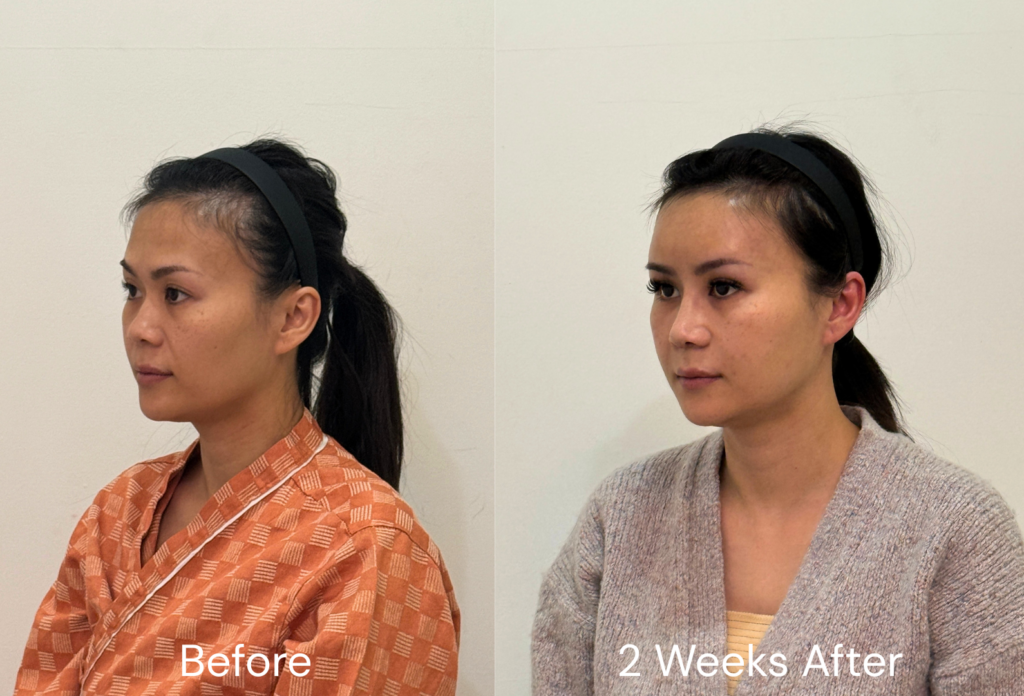
Miin coordinates consultations with partner clinics with established fat grafting and stem cell fat grafting programs. If you are considering volume restoration, we arrange a full assessment with the operating surgeon as part of your trip, at no added cost and no markup on hospital pricing. Get in touch to start planning.