



If you’ve been researching hooded or sagging eyelids, you’ve probably come across two procedures: upper blepharoplasty and sub brow lift. They sound like they do the same thing. They don’t.
Choosing the wrong one for your anatomy is one of the more common mistakes in eyelid rejuvenation planning, and it’s easy to make if you’re going by photos alone without understanding what the difference actually is.
What Upper Blepharoplasty Does
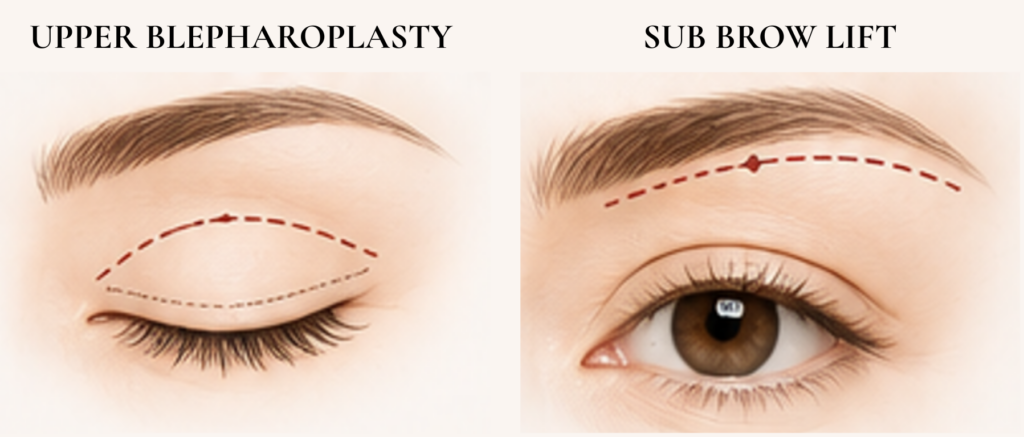
Upper blepharoplasty makes an incision on the eyelid itself, removes excess skin and fat from the lid, and creates or refines the crease. The scar sits within the crease line and becomes invisible once healed.
It is the right procedure when the eyelid itself has excess skin but the eyebrow is still in a reasonably good position. The concern is on the lid, and the correction stays on the lid.
What Sub Brow Lift Does
A sub brow lift makes its incision along the lower edge of the eyebrow, just underneath the brow hairs. Excess skin is removed from beneath the brow, the underlying orbicularis oculi muscle is tightened and fixed securely to the periosteum (the tissue over the bone), and the brow is lifted upward.
The scar follows the natural lower contour of the brow. Because brow hairs disguise the incision line, it heals to a point where it is almost unnoticeable within about a week.
The result is not a changed eye shape. It is a lift. The brow and the skin above the eyelid are elevated, restoring the space between the lid and the brow that aging has compressed.
The Space Between the Lid and Brow
This is the key concept.
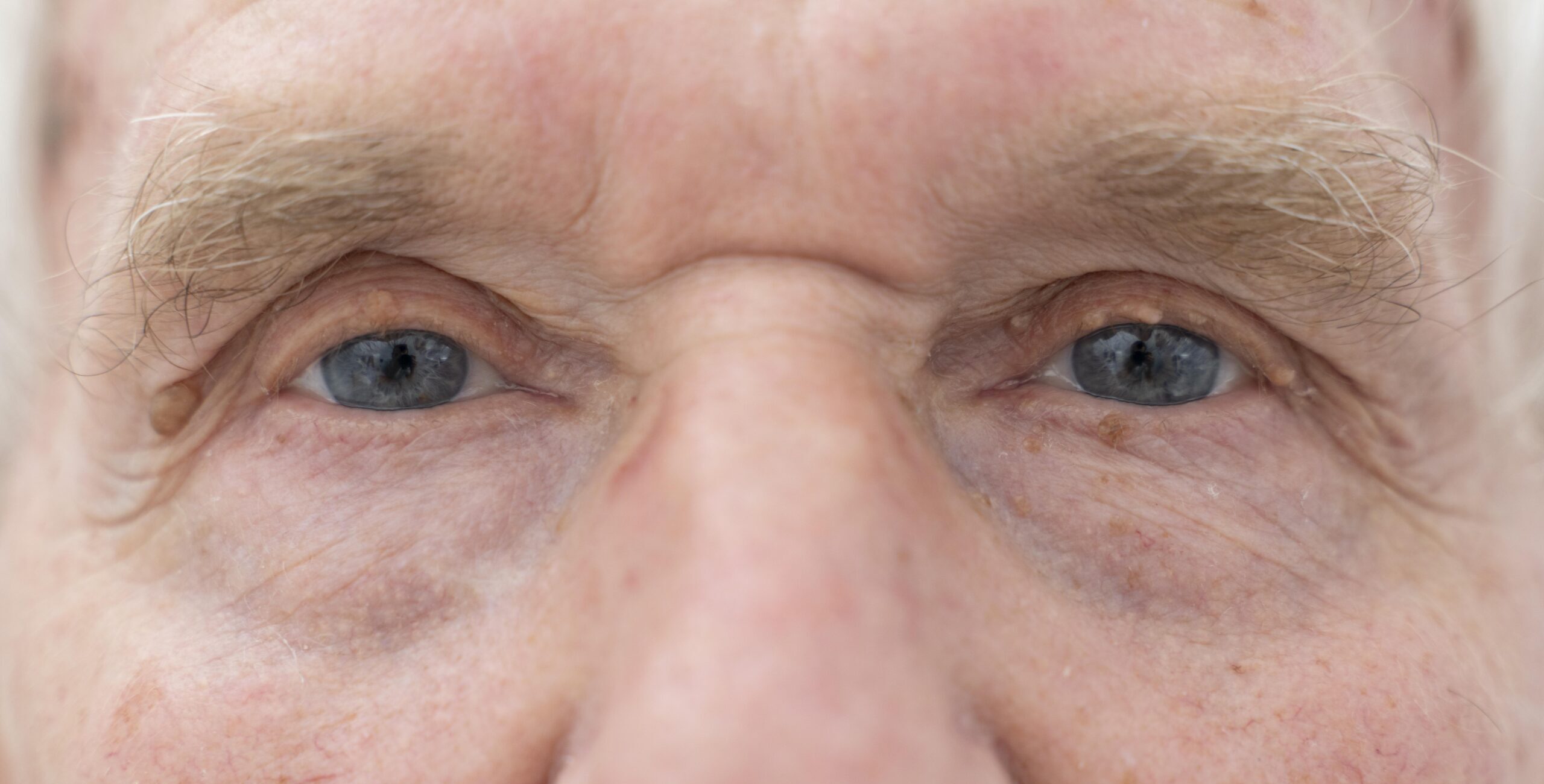
There is a zone of skin between the upper eyelid crease and the lower edge of the brow. In our youth, this space is relatively open. As aging progresses or in some people, due to genetics, the brow descends and that skin accumulates, folding down over the crease and pressing onto the eyelid.
When this happens, performing upper blepharoplasty alone creates a problem. The surgeon has to remove a significant amount of skin from the lid to compensate for the downward pressure from above. This can raise the crease unnaturally high, shorten the distance between the crease and the brow even further, and produce a result that looks operated on rather than refreshed.
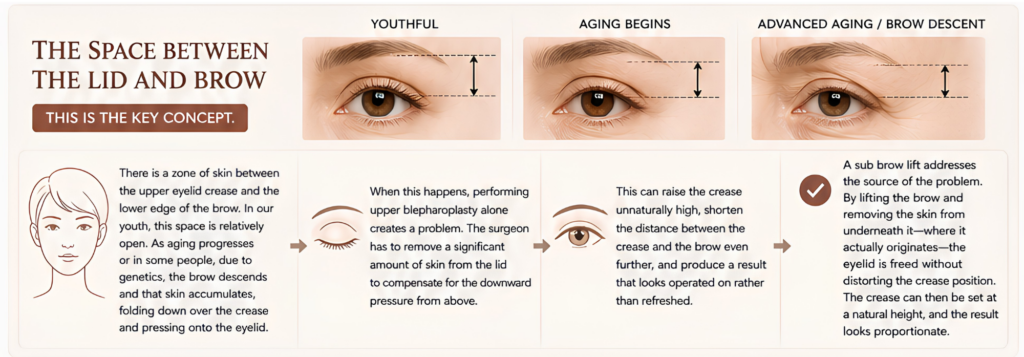
A sub brow lift addresses the source of the problem. By lifting the brow and removing the skin from underneath it; where it actually originates — the eyelid is freed without distorting the crease position. The crease can then be set at a natural height, and the result looks proportionate.
When Sub Brow Lift Is the Right Choice
Hooded eyelids where the excess skin originates above the lid. If the skin that folds over your eye originates from the brow area rather than the lid itself, removing it from the lid treats the symptom rather than the cause. The brow will continue descending, and the hooding will return.
When the space between the crease and the brow is already short. If a surgeon removes skin from the lid in this anatomy, the crease ends up sitting very close to the brow — sometimes just a few millimeters below it. The result can look unnatural and stiff.
Moderate to severe sagging where the eyelid skin is obstructing vision. When drooping eyelid skin reaches the lash line or obscures the visual field, the degree of correction needed is more than upper blepharoplasty alone can provide. Sub brow lift addresses this more comprehensively by lifting from the correct anatomical level.
When the forehead is compensating. People with descended brows often unconsciously raise their forehead muscles to lift the skin away from the eyes. This creates horizontal forehead lines and chronic muscle tension. Addressing the brow position directly eliminates the need for that compensation, and forehead wrinkles often soften as a result.
Not sure if you need a sub brow lift with your double eyelid surgery? Contact us for a consultation
The Two Procedures Are Not Always Mutually Exclusive
In some patients, the brow has descended and the eyelid also has independent excess skin. In these cases, both procedures may be performed together. The sub brow lift corrects the upper zone; upper blepharoplasty refines the lid itself.
The distinction matters because performing only upper blepharoplasty in a patient who also has brow descent will produce a shorter-lived and less natural result. The surgeon has to over-correct on the lid to compensate for something that isn’t being addressed at its source.
Good surgical planning assesses the brow position, the eyelid structure, and the crease height as a connected system, not as isolated concerns.
A Note on Double Eyelid Surgery and Brow Position
For patients planning double eyelid surgery who also have descended brows or significant hooding, the brow anatomy needs to be assessed before the crease height is decided.
If the brow is descending, designing the crease at a standard height may give an unbalanced result once the brow continues to drop — or it may require the crease to be set unusually high to stay visible, which can look unnatural.
If you’re unsure whether you need upper blepharoplasty, a sub brow lift, or both, our team will arrange a proper surgical assessment as part of your trip planning — no markup, no guesswork.