


You’ve seen the before and afters. You’ve done the research. Now you’re trying to figure out which type of eye surgery is actually right for you — and whether the consultation you’re planning will give you a clear answer.
This is what you need to understand before you walk into that room.
The Two Methods: Non-Incisional vs Incisional
Every double eyelid surgery in Korea falls into one of two categories. Which one applies to you depends on your eyelid anatomy.
Non-Incisional Method
The surgeon places sutures at precise points along the eyelid to create and anchor the crease. No skin or fat is removed. The procedure is shorter, recovery is faster, and there is no visible scarring.
This method works well when the eyelid skin is thin and there is minimal fat. The crease it creates is natural and subtle. Most patients are back to daily activities within a week.
The limitation is longevity. On thicker or heavier eyelids, the sutures can loosen over time; sometimes within a few years. When that happens, revision is needed. That revision almost always requires incisional surgery.
Incisional Method
The surgeon makes a precise incision along the eyelid crease line, removes excess skin and fat as needed, and permanently anchors the crease to the underlying tissue. The result is stronger and more defined.
This method is recommended for thicker eyelids, patients with excess fat, significant asymmetry, drooping eyelids (ptosis), or anyone who has already had non-incisional surgery that loosened. Recovery takes longer: initial swelling peaks within the first few days and fully resolves over 3 to 6 months.
The incision is placed within the natural crease line. Once fully healed, it is not visible.
The Crease Design: What Line You’re Actually Choosing
The method is how the surgery is done. The crease design is what you see in the mirror afterward.
Korean surgeons categorize crease designs along a spectrum, from natural and close to the lash line, to higher and more defined.
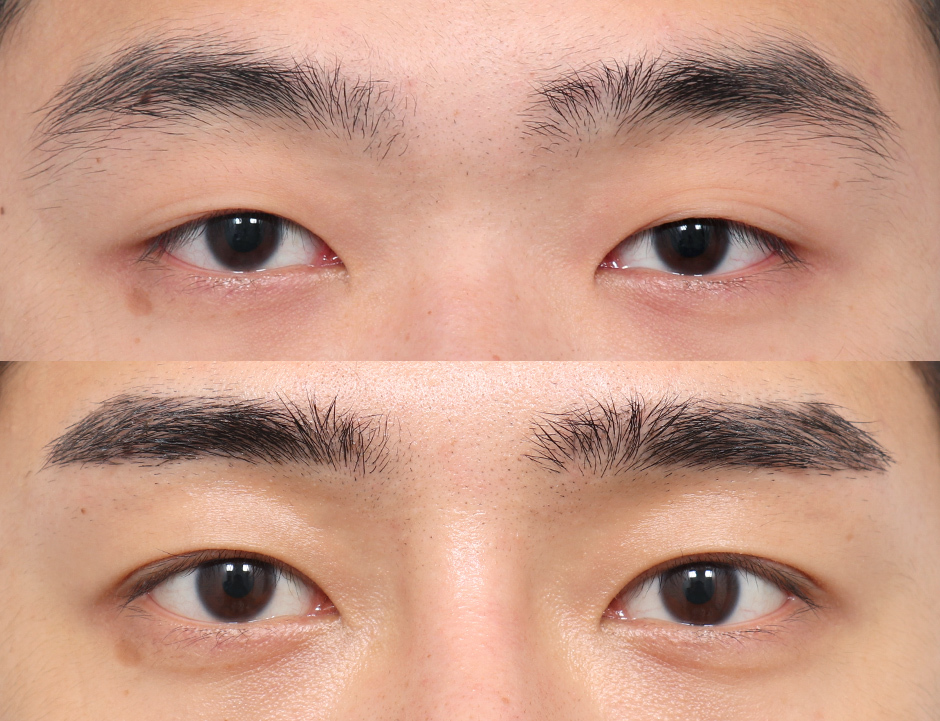
In-line
The crease sits close to the lash line and is barely visible when the eye is open. It looks like a naturally occurring fold rather than a surgical result. This is typically achieved non-incisionally for patients with thin eyelid skin.
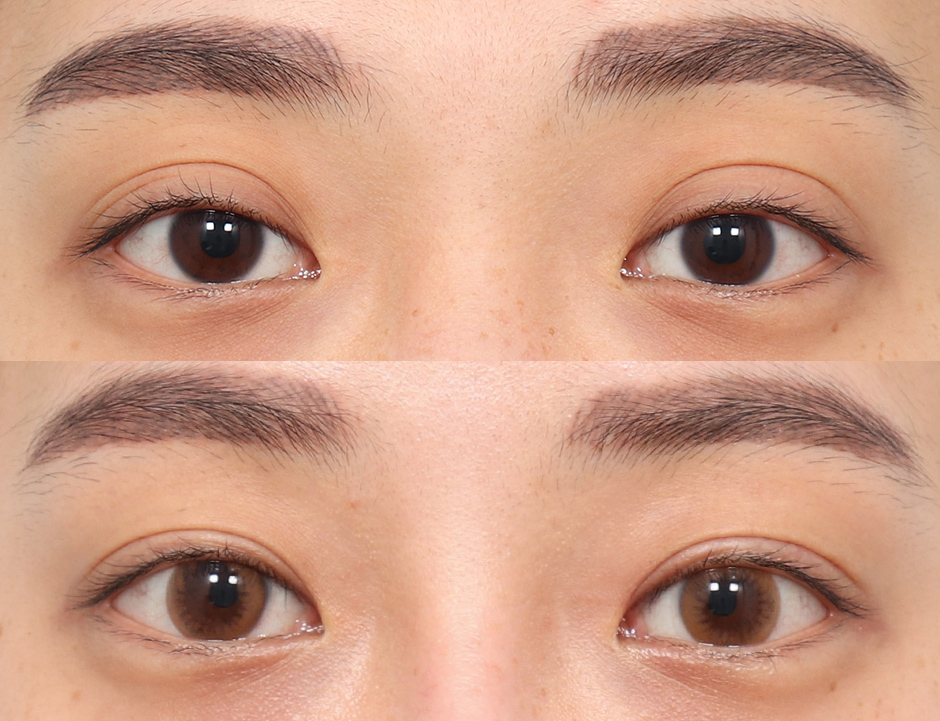
In-outline (In-out line)
In-outline creates more definition. The crease starts close to the inner corner and becomes more pronounced toward the outer eye. It gives a brighter, more open appearance while still reading as natural.
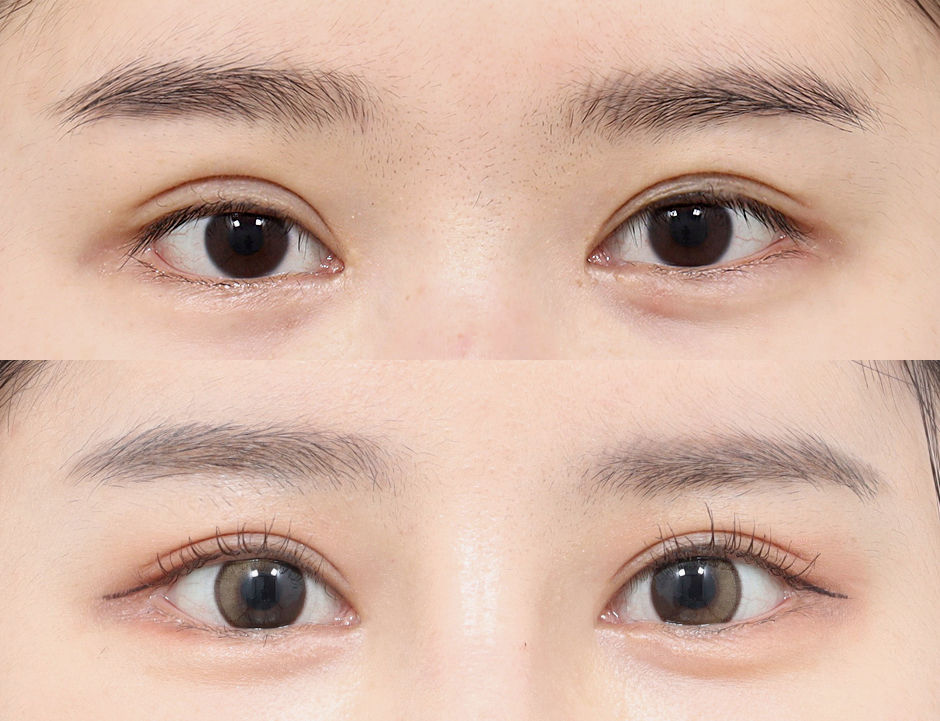
Semi-outline
Semi-outline is the most popular choice among Southeast Asian patients. It is defined without being dramatic — the crease is clearly visible and gives significant lift, but does not create an overtly Western appearance.
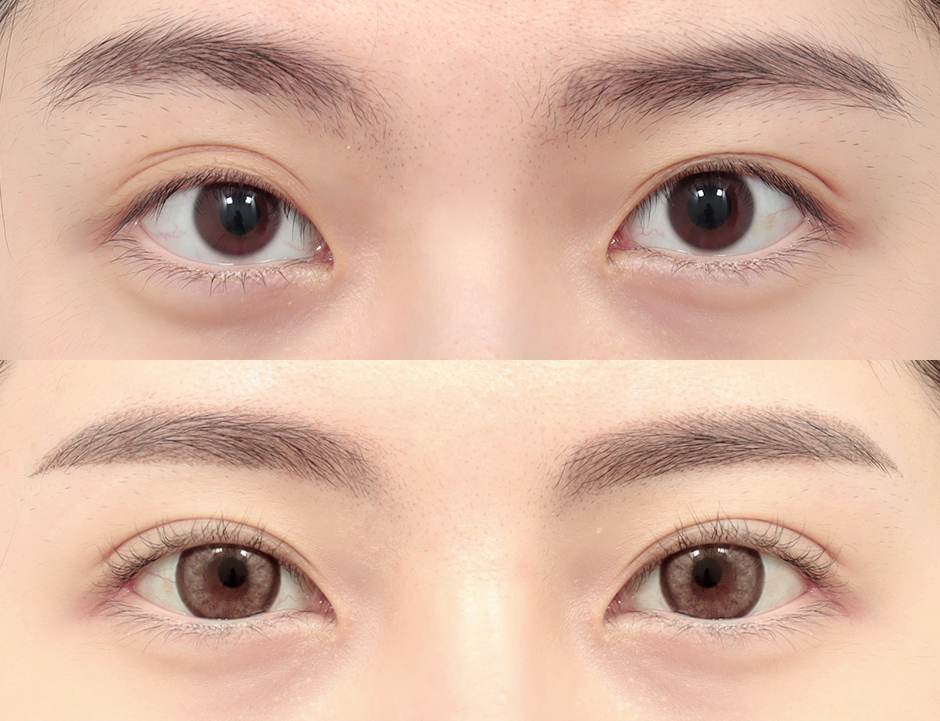
Outline
Outline places the crease at its highest position, producing the most pronounced result. It is suited to patients with significantly thick or puffy eyelids and those seeking a more dramatic transformation.
The right design is not about which looks best in someone else’s photo. It is about what is proportionate to your existing eye structure, face shape, and nose bridge height. A surgeon who recommends the same crease design to every patient is not assessing you properly.
What to Check Before Surgery
- Ptosis
This is a condition where the muscle that lifts the upper eyelid is weakened, causing the lid to sit lower than normal. Signs include one or both lids partially covering the iris, habitually raised eyebrows, forehead tension, or appearing persistently tired. If you have ptosis and only get a double eyelid crease without correcting the muscle, the result will be asymmetrical or flat. Ptosis correction is frequently combined with double eyelid surgery and does not add significant recovery time.
- Existing asymmetry
Most people have naturally asymmetrical eyes. A skilled surgeon designs the crease differently for each eye to produce a balanced result, not an identical one. This should be discussed explicitly in your consultation.
Recovery: What the Timeline Actually Looks Like
International patients are generally advised to stay in Seoul for at least 7 to 8 days. This covers the pre-surgery consultation, the procedure itself, initial recovery, and stitch removal before flying home.
A Note on Planning: Why Eyes and Nose Are Often Done Together
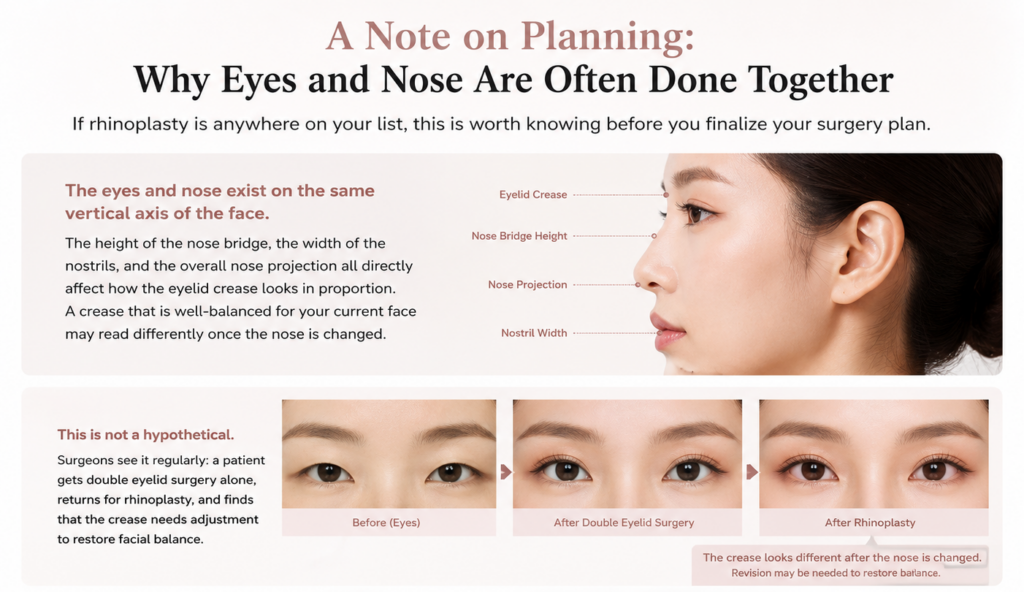
If rhinoplasty is anywhere on your list, this is worth knowing before you finalize your surgery plan.
The eyes and nose exist on the same vertical axis of the face. The height of the nose bridge, the width of the nostrils, and the overall nose projection all directly affect how the eyelid crease looks in proportion. A crease that is well-balanced for your current face may read differently once the nose is changed.
Surgeons see it regularly: a patient gets double eyelid surgery alone, returns for rhinoplasty, and finds that the crease needs adjustment to restore facial balance. That means a second eye surgery, a second recovery, and a second trip.
If both procedures are on your list, a single trip that covers both produces a more harmonious and final result. Your surgeon designs the crease with the post-rhinoplasty nose in mind, and the two outcomes are balanced from the start.
This is not always possible for every patient, and it is not a requirement. But if you are already planning both, it is worth raising in consultation rather than discovering after the fact.
Before You Leave for Korea
Stop wearing contact lenses before surgery. You will need to arrive in glasses.
Stop blood-thinning supplements — aspirin, fish oil, vitamin E, ibuprofen — at least one week prior. These increase bleeding risk.
Avoid alcohol and smoking for at least two weeks before surgery. Both impair healing and affect anesthesia.
Arrive with clear reference photos. Not celebrity photos chosen because you admire someone’s face. Photos of eye shapes that demonstrate what kind of crease you want, along with an honest discussion of what is anatomically achievable for you.
Miin has a direct relationship with all our partner clinics and no markup on prices. If you’re planning eye surgery in Korea, we handle everything from your first consultation to your recovery and departure. Get in touch to start planning your trip.